
What happened
What set off the Katy crackdown?
In January 2026, KHOU 11 reported on the Lakecrest subdivision in Katy, where residents said 18-wheelers had been parking near the neighborhood entrance for more than a year. Their complaint was visibility. The road narrows from four lanes to two right where the trucks stood, and drivers pulling out could not see oncoming traffic.
Precinct 4 officials ran a traffic study and put up a no-parking sign near the entrance in December. Some trucks kept parking past the sign. Residents called the sheriff's office, and on the evening the story aired one truck was towed. The residents told the station they want commercial trucks banned from the area altogether.
Lakecrest is one subdivision, but the pattern is common across west Harris and Fort Bend counties. A few neighbors complain, a county office looks at the street, signs go up, and enforcement follows.
The rules
Which rules apply to a big rig on a residential street?
Three separate layers can apply to the same curb. Which ones reach a given street depends on whether it sits inside a city, which county it is in, and whether the subdivision has deed restrictions.
- State law on posted subdivisionsTexas Transportation Code §545.307 bars parking a truck tractor, semitrailer or other commercial motor vehicle between 10 p.m. and 6 a.m. on a county or city street inside a residential subdivision, or on an adjacent street within 1,000 feet of a home, school, place of worship or park, once signs are posted. Residents get the signs by petition signed by at least 25% of households, and the county or city must then post them.
- City ordinancesThe same statute says it does not limit a city's power to regulate commercial vehicle parking, so cities can go further. The City of Katy's code enforcement office sends parking complaints to Katy police, and it notes that many properties with a Katy mailing address are outside city limits. Check which jurisdiction your street is in before relying on any rule.
- HOA deed restrictionsMany subdivisions restrict commercial vehicles through their deed restrictions, which can reach driveways as well as streets. Under Texas Property Code §209.006, an association must send written notice by certified mail with a reasonable period to cure before it can fine an owner. After that, the fine schedule is whatever the association's rules set.
The state rule only covers subdivisions in counties with more than 220,000 people. By the Census Bureau's figures, Harris and Fort Bend counties are well over that line and Waller County is well under it. In Waller County subdivisions, city ordinances and deed restrictions do the work instead.
How it spreads
Why is enforcement increasing?
The petition process in §545.307 is simple, and once a petition meets the 25% threshold the county has to act. Harris County Commissioners Court agendas show how it plays out. In May 2025 the court took up a request to accept a subdivision's petition for no-overnight-parking signs after residents complained about 18-wheelers parking overnight, citing safety and visibility.
Each posted subdivision removes a stretch of curb that drivers used to count on. The trucks move to the next unposted street, the neighbors there complain, and the process repeats. A driver who has parked on the same street for years can find signs at the entrance with little warning.
The cost
What does a ticket or a tow cost a driver?
- The citationParking against posted §545.307 signs is a misdemeanor. Where no other penalty is set, the general penalty in Transportation Code §542.401 is a fine of up to $200. City ordinances can carry their own penalties.
- A tow from a public streetWhen an officer has a vehicle removed from a street, §545.305 makes the owner liable for all reasonable towing and storage fees.
- A tow from private propertyA truck moved to a retail or apartment lot after the street closes is exposed to a nonconsent tow. The Texas Department of Licensing and Regulation caps those at $489 per unit for vehicles over 25,000 lbs, up to $978 for a tractor and trailer, before daily storage.
- The lost timeFinding the truck, getting to the storage lot and paying to release it can take most of a day. That is a day the truck is not running a load.
A single private-property tow at the $978 cap is more than seven months of a standard tractor-trailer stall at the published $129.99 monthly rate. The unsafe-parking cost post itemizes storage fees and theft losses as well.
The options
Where can a tractor-trailer legally park instead?
- Your own driveway or landOnly where the deed restrictions and zoning allow it. Most Katy-area subdivisions do not, and a tractor with a 53-foot trailer rarely fits a residential lot anyway.
- Rural land you own or leaseLegal where zoning allows. It is usually unfenced and unlit, with nobody on site. That matters to your insurer as well, since the garaging address is part of how a policy is rated.
- A monthly stall at a truck yardA space that is yours by agreement, which no petition or HOA letter can take away. Compare yards on access hours, lighting, cameras and whether anyone is on the property overnight.
For box trucks, bobtails and vans, the rules and options are different enough to need their own page. The Katy box-truck post covers them.
At LockRig
What does LockRig offer a Katy-area driver?
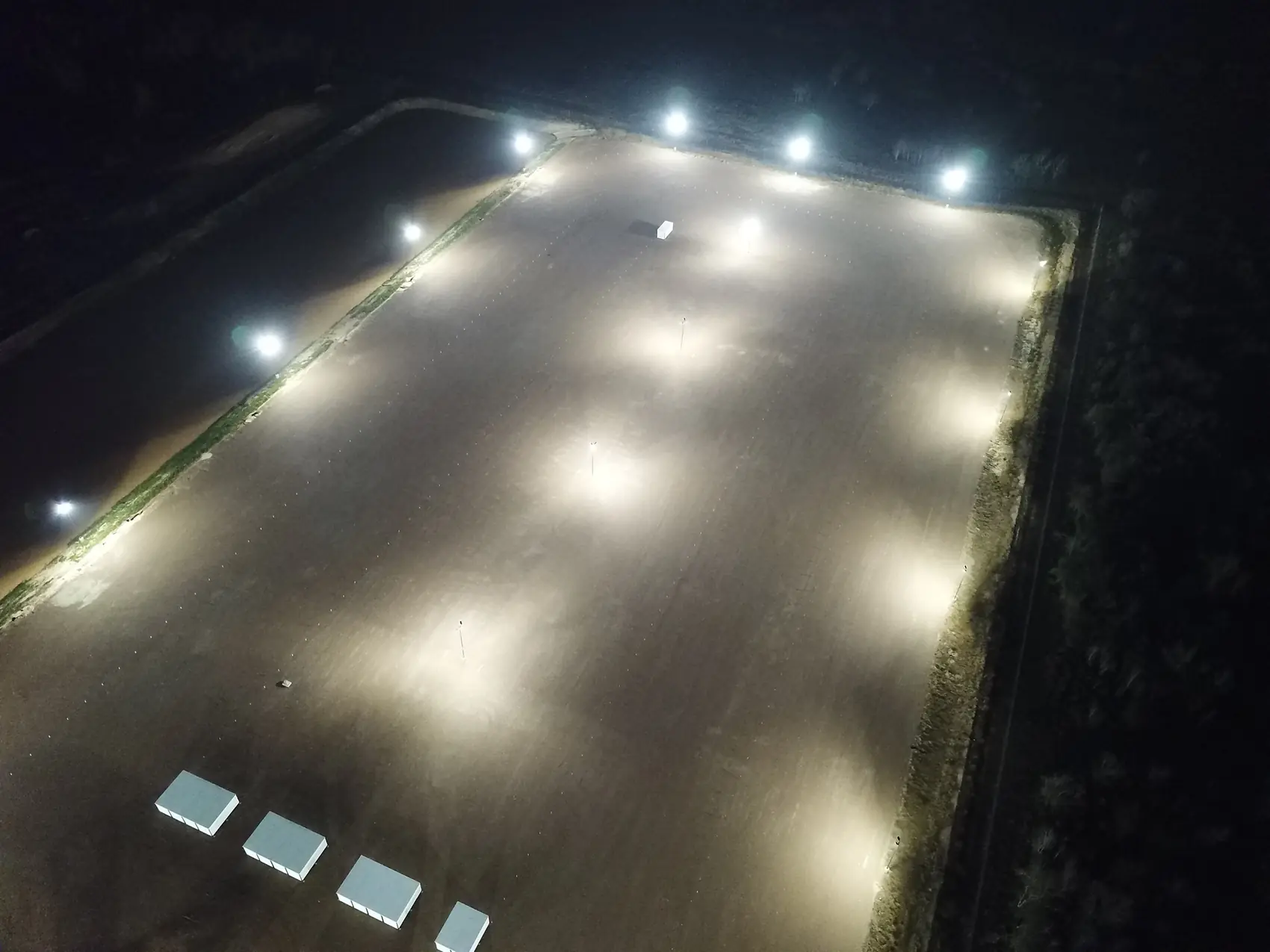
LockRig Storage & Parking is at 3485 FM 362 in Brookshire, about 12 minutes west of Katy and five minutes from I-10 exit 732. The yard is fenced and gated, with LED lighting end to end, security cameras and a resident manager who lives on the property. The gate is open 24/7 and opens by app or by an individual keypad code. Every stall is visible from the drive aisle, the layout is a loop that leaves only through the gate, and there is a backup generator on site for outages.
Standard 80-foot stalls take a tractor and a 53-foot trailer at $129.99 a month or $14.99 a day, month to month with no contract. A 55-foot stall for a dropped trailer is the same $129.99 a month. The semi-truck parking page lists every size, and the Katy directions page covers the drive. A free 30-minute site tour is available if you call ahead on 1-844-LOCK-RIG.
Find the yard
Five minutes north of I-10, exit 732
3485 FM 362, Brookshire, TX 77423 — tap the map and Google Maps takes you straight to the gate.
The entrance is signed from the road — no hunting an unmarked driveway in the dark.
A stall no petition can close
Standard tractor-trailer stalls from $129.99 a month, 12 minutes west of Katy off I-10 exit 732, with the gate open 24/7.