
The weather
What is a bomb cyclone, and what actually reaches Southeast Texas?
A bomb cyclone is a storm whose central pressure falls very fast. NOAA defines it as a midlatitude cyclone that drops at least 24 millibars in 24 hours at 60 degrees latitude, with a lower threshold closer to the equator. The deep snow in the headlines usually falls far to the north and east. What reaches the Gulf Coast is the cold air behind these systems. That means an Arctic front, a hard freeze, sometimes freezing rain or sleet, and a strong north wind.
The National Weather Service office in Houston/Galveston, which covers Waller, Fort Bend and Harris counties, publishes the thresholds it uses for its alerts. These are the ones that matter most to a truck:
- Freeze WarningTemperatures at or below 32°F expected. Hard freeze wording is added when 24°F or colder is expected for two hours or more.
- Wind AdvisorySustained winds of 25 mph or more expected.
- High Wind WarningSustained winds of 40 mph or more for at least an hour, or gusts of 58 mph or more.
- Extreme Cold WarningIssued when parts of the area are expected to reach 15°F or 10°F, depending on the zone.
January 2026
What happened around Houston in January 2026?
Winter Storm Fern crossed Texas from 23 to 26 January. The governor issued a disaster declaration on 22 January for 134 counties and expanded it to 219 counties on 25 January. The City of Houston asked residents to stay off the roads from midnight on Saturday 24 January until Monday morning, warning that ice buildup would make driving extremely dangerous.
The statewide grid held. A stable grid still does not keep a local line up under a coat of ice or a falling limb, and that is the outage a yard has to plan for. It is also why the freeze plan and the Gulf storm-season plan end up looking alike.
The truck
What does a hard freeze do to a truck?
- Fuel gelsNo. 2 diesel carries paraffin wax that starts to crystallize at its cloud point. One fuel supplier puts that at 14°F for No. 2 diesel, with the filter-plugging point typically within a few degrees of it. Blending in No. 1 diesel or adding a cold flow improver lowers the risk. Treat the tank before the temperature drops, especially if a load is taking you north into the front.
- Air lines freezeCompressed air carries water and compressor oil. The standard CDL manual air brakes section warns that the water can freeze and cause brake failure. Drain the tanks at the end of each day of driving, and if the truck has an alcohol evaporator, check and fill it every day in cold weather.
- Parking brakes freezeThe same manual warns that spring brakes set while very wet can freeze so the vehicle cannot move. On level ground in a freeze, it recommends wheel chocks.
- Batteries weakenBattery performance falls in cold weather, at the same time a cold diesel needs more from it to crank. A weak battery or a loose terminal tends to show up on the first hard freeze of the year.
- Wind moves empty trailersThe National Weather Service notes that sudden gusts can cause a loss of control in high-profile vehicles. An empty dry van or reefer is a tall, light box. When a High Wind Warning is out, running empty is the case to reconsider first.
- Bridges ice firstTxDOT lists bridges, ramps, overpasses and shaded areas as the places that freeze first. On this stretch of I-10, that means every overpass and the Brazos River crossing between Brookshire and Sealy.
The plan
What should drivers do before and during a freeze?
Most of the work happens the day before the front arrives.
- 1. Watch the local officeFollow the Houston/Galveston forecast and its alert thresholds above, not the national headline. The timing of the front decides your plan.
- 2. Check the road before you rollTxDOT's DriveTexas shows closures, crashes and weather impacts, with live cameras.
- 3. Fuel and treatTop off with winter-treated fuel or add a cold flow improver while the fuel is still warm.
- 4. Drain and check the air systemDrain the tanks and fill the alcohol evaporator if the truck has one.
- 5. Stock the cabFood and water for a couple of days, blankets, a flashlight, a charged power bank and any medication you take.
- 6. Decide where the truck sits it outChoose before the ice, when the roads to get there are still clear. A dropped empty trailer is safer parked than pulled through a High Wind Warning.
- 7. If you have to driveTxDOT's first advice is to stay off the roads. If you can't, it says to slow down, keep at least three times the normal following distance on snow or ice, and take extra care on bridges and ramps.
The yard
Why does a lit, fenced yard with a generator matter when the power drops?
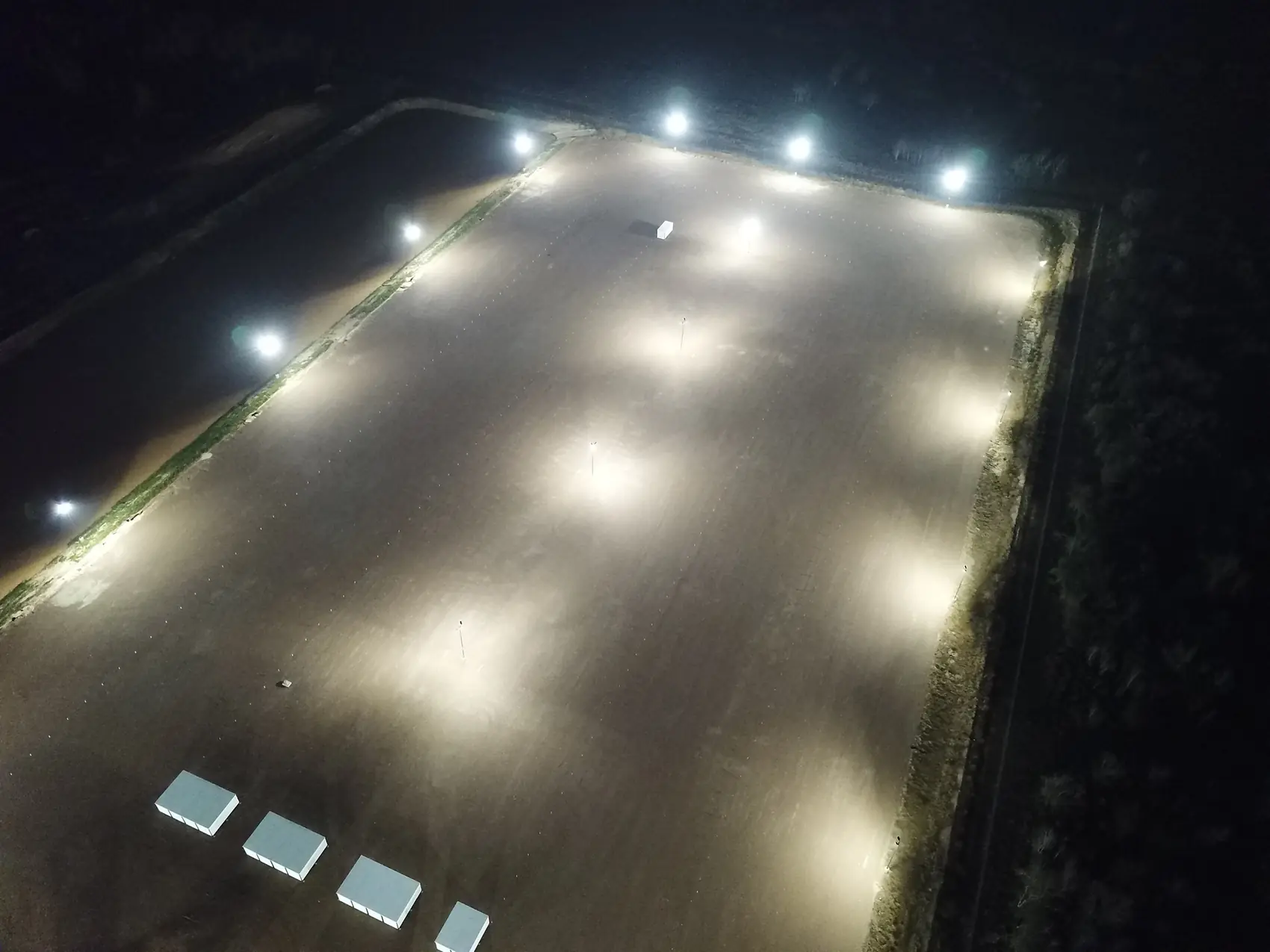
An outage turns off the things that make a lot secure. Lights go dark, electric gates stop, and cameras stop recording. A truck left in a dark lot during an ice storm is parked somewhere nobody is watching and nobody can reach.
- Backup generatorAt LockRig in Brookshire, there is a backup generator on site and steps in place for an outage.
- Access that still worksThe gate is open 24/7 and opens by app or by an individual keypad code, so a dead phone doesn't lock you out. The security page lists every layer.
- Someone on the propertyA resident manager lives on site. What that looks like at 2 a.m. is its own post.
- Room for the whole rigFenced and lit end to end, with wide drive aisles and stalls that take a tractor and a 53-foot trailer. A dropped trailer fits a 55-foot stall at $14.99 a day or $129.99 a month, and trailer storage covers the options.
The yard is at 3485 FM 362, about five minutes from I-10 exit 732 and about 12 minutes west of Katy. Rates are published on the pricing page, month to month with no contract.
Find the yard
Five minutes north of I-10, exit 732
3485 FM 362, Brookshire, TX 77423 — tap the map and Google Maps takes you straight to the gate.
The entrance is signed from the road — no hunting an unmarked driveway in the dark.
Somewhere to sit out the next front
A fenced, lit yard with cameras and a backup generator on site, five minutes off I-10 at Brookshire. Stalls at $14.99 a day or $129.99 a month.